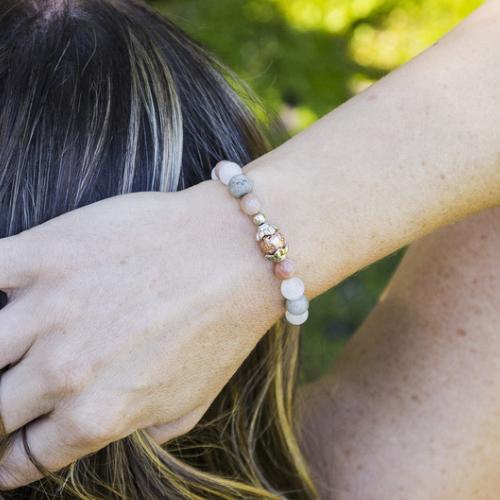




What Are Mala Beads A Guide to Mindfulness and Intention
So, what exactly are mala beads? At their heart, they are a simple string of prayer beads—traditionally 108 beads plus a larger "guru" bead—used for meditation and spiritual practice. But they are so much more than that. Think of them as a tangible tool, something you can hold in your hands to quiet the mind, focus your energy, and connect with your deepest intentions.
Your Journey Into the World of Mala Beads
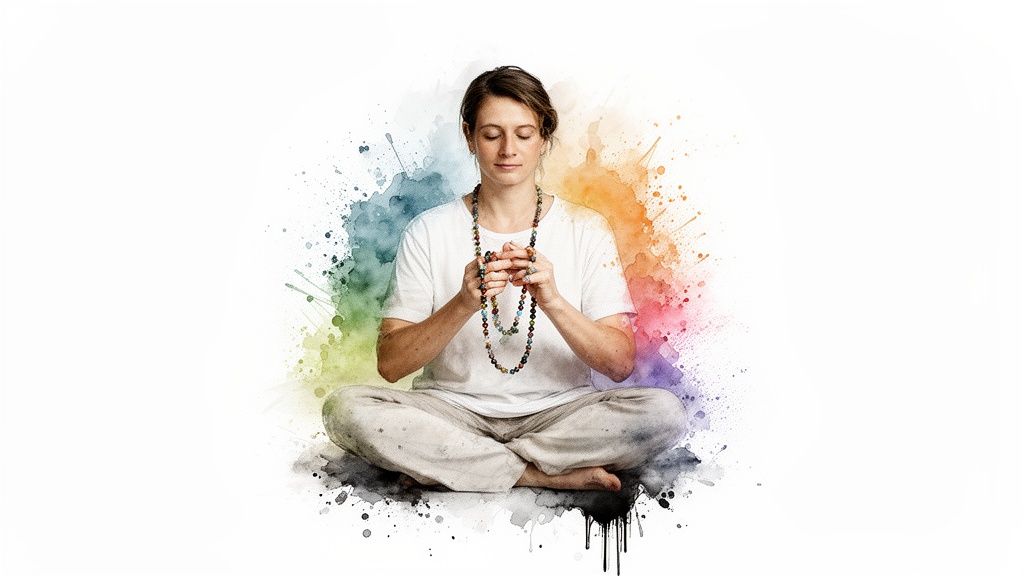
Have you ever found your mind racing, pulled in a hundred different directions by the endless to-do list of a busy day? It’s a modern challenge, but mala beads offer a beautiful and ancient solution. They're far more than just a stunning necklace; they are a physical anchor for your awareness, a guide leading you back to the stillness of the present moment.
Picture this: you're holding a string of smooth, cool beads. As you touch each one, you silently repeat a calming word or phrase—a mantra. This simple, rhythmic action gives your restless mind a single point of focus, gently pulling you away from distracting thoughts and into a state of deep peace. This powerful practice, known for centuries as Japa meditation, is a direct path to inner tranquility and spiritual connection.
To give you a quick overview, here’s a simple breakdown of the key elements you'll find in a mala.
Mala Beads at a Glance
| Component | What It Is | Its Primary Purpose |
|---|---|---|
| 108 Beads | The main beads used for counting mantras. | Represents a sacred number, guiding the practitioner through 108 repetitions. |
| Guru Bead | A larger, central bead at the bottom of the mala. | Marks the start and end of a meditation cycle; a point of reflection. |
| Tassel/Pendant | A decorative finish often made of silk or cotton. | Symbolizes the connection to spirit and the energy of the universe. |
| Knots | Small knots tied between each bead. | Creates space for easy counting and infuses the mala with intention. |
This table shows how each part of the mala works together, creating a beautiful and functional tool for your mindfulness practice.
A Tool for Intention and Mindfulness
But the magic of a mala doesn't stop when your meditation session ends. When you wear it as a necklace or wrap it around your wrist, it becomes a constant, gentle reminder of the intentions you're weaving into your life. It transforms into a personal symbol of your journey toward:
- Calmness: A touchstone to ground you during a sudden wave of stress.
- Purpose: A visual cue that reconnects you with what truly matters to you.
- Mindfulness: An open invitation to stay present and aware throughout your day.
A mala is your sacred companion. It's a strand of intention-infused beads that bridges the gap between your inner aspirations and your daily actions. It makes abstract goals something you can see, touch, and feel.
Here at Evolve Mala, we handcraft each piece to be a potent and beautiful tool for your wellness journey. Whether you're just starting to explore mindfulness or you're a seasoned practitioner, mala beads offer an incredibly accessible way to deepen your practice. They invite you to slow down, breathe, and reconnect with yourself—one bead at a time.
This guide will walk you through everything you need to know about these sacred instruments, from their ancient origins to how you can welcome them into your own life for greater peace and self-discovery.
The Ancient Roots of Modern Mindfulness
To really get to the heart of what mala beads are, we have to travel back thousands of years to their spiritual birthplace in ancient India. These beautiful strands aren't just a modern wellness accessory; they're ancient tools with a soul, born from that timeless human need for connection and inner peace.
Long before mindfulness apps and guided meditation podcasts existed, spiritual seekers needed tangible anchors to help focus their minds. The mala, or japamala as it’s traditionally called, was one of the earliest and most effective of these tools. It was a simple, brilliant answer to an age-old problem: how do you quiet the constant chatter in your head?
The Birth of a Sacred Tradition
The practice of using these prayer beads goes all the way back to India around the 8th century BCE. That makes them one of the oldest spiritual counting tools in history. Hindu sadhus (holy men) and yogis would use these garlands, often made from simple rudraksha seeds, to count their mantras. This allowed them to stay completely immersed in their devotion without ever losing track.
This powerful practice didn’t stay confined to one tradition for long. It spread and wove itself into the spiritual fabric of Buddhism, Jainism, and Sikhism. It even inspired the creation of the Catholic rosary after Crusaders encountered them. You can dive deeper into the fascinating history of mala beads and see how they traveled across cultures.
This rich history shows us that the core principles of mindfulness are truly universal and enduring. They’re just as relevant today, offering effective workplace stress management techniques for our incredibly demanding modern lives.
The Cosmic Significance of 108
You’ll almost always find that a traditional mala has 108 beads. This isn't just a random number—it’s a deeply sacred figure that connects us to the cosmos, our own bodies, and ancient spiritual wisdom. The number 108 echoes through so many traditions, with each mention adding another layer of profound meaning.
To hold a 108-bead mala is to hold a microcosm of the universe in your hands. It's a reminder of the intricate connections between your inner world and the vast cosmos.
So, why 108? While there are countless interpretations, here are a few of the most powerful ones:
- Spiritual Texts: It's said there are 108 Upanishads, the foundational philosophical texts of Hinduism.
- Heart Chakra: Many believe there are 108 energy lines (nadis) that all converge to form the heart chakra, our spiritual and emotional core.
- Cosmic Connection: The average distance from the Earth to the Sun, and from the Earth to the Moon, is approximately 108 times their respective diameters. It's a number that reflects celestial harmony.
From the first rudraksha seeds to the precious gemstones we use today, the evolution of mala materials tells the story of their journey from a simple counting tool to a deeply personal instrument for setting intentions. This incredible history gives every mala a powerful heritage, making it so much more than an accessory. It's a timeless bridge to your own inner stillness.
Understanding the Anatomy of a Mala
A mala is so much more than a beautiful string of beads. Each part is thoughtfully chosen and strung with intention, creating a spiritual roadmap you can literally hold in your hands. To really connect with what mala beads are, it helps to see how they’re put together, piece by piece. Think of it like learning the parts of a compass—every element is there to guide you.
The heart of every traditional mala is its 108 counting beads. This sacred number is deeply significant, tying your personal practice to a greater cosmic and spiritual rhythm. As you glide your fingers from one bead to the next, reciting a mantra, you’re taking part in an ancient tradition, creating a perfect loop of focus and devotion. This simple, repetitive motion is what keeps your mind anchored right here, right now.
The Guru Bead: Your Spiritual Anchor
Every journey has a starting point, and for a mala, that's the Guru bead. This is the larger bead you’ll find at the base, right above the tassel, marking the beginning and end of your meditation cycle. It represents the sacred relationship between student and teacher—whether that teacher is a guide, a divine source, or the wisdom you hold within yourself.
When your fingers reach the Guru bead, it’s a sign to pause and reflect. You don’t cross over it. Instead, you honor the completion of one full cycle. It's a beautiful, built-in reminder to offer a moment of gratitude for your practice and for whatever insights came through.
This simple flow shows the powerful journey from the mala's origins in India to its role in modern mindfulness, all guided by sacred numbers.
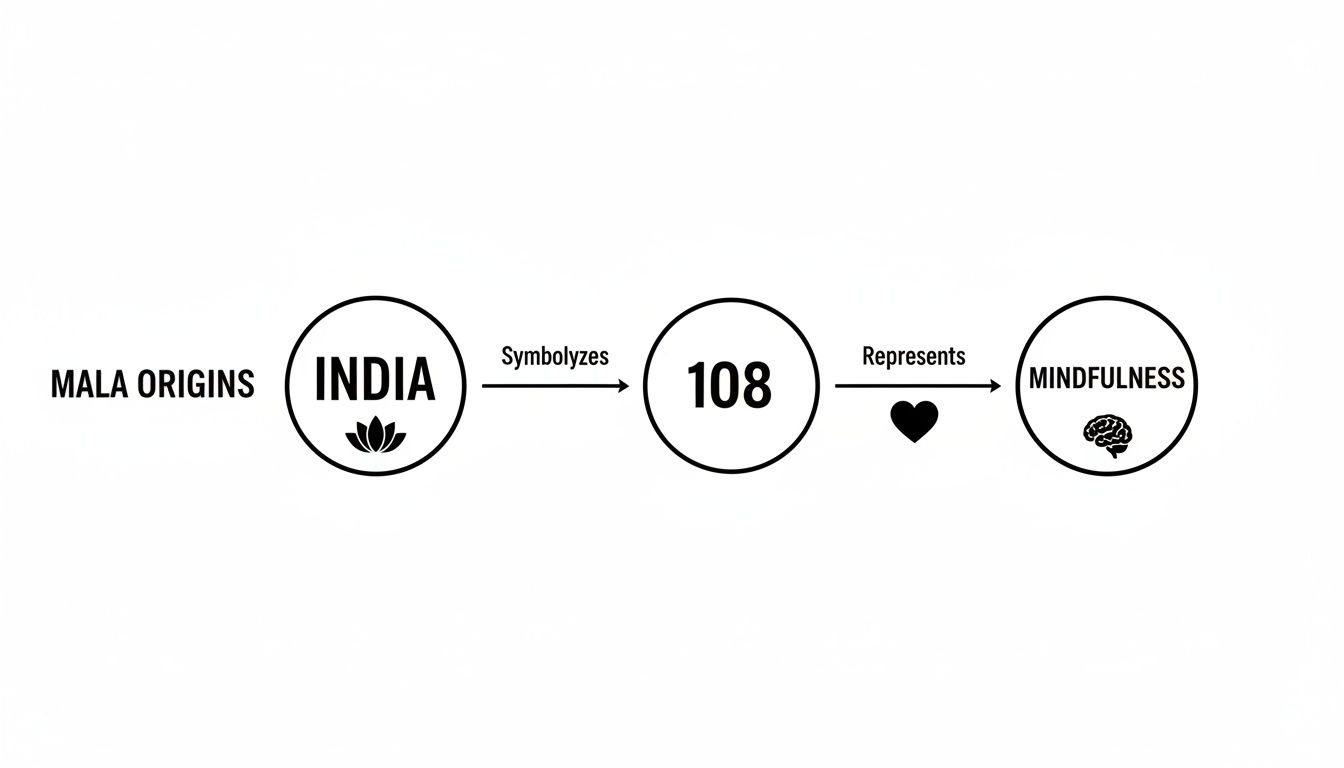
It's amazing how a tangible object, born from ancient traditions in India and built around the number 108, becomes such a potent tool for mindfulness today.
The Tassel: A Symbol of Oneness
Finally, we have the tassel. It’s certainly beautiful, but its purpose goes far beyond simple decoration. See how all the individual threads come together to form one single, unified tassel? This symbolizes our connection to a higher power and to one another. It's a beautiful representation of oneness, a reminder that everything is interconnected.
The tassel is like the roots of a lotus flower, flowing outward and grounding your personal energy into the vastness of the universe. It’s a physical touchstone for enlightenment and your ethereal connection to all things.
Sometimes, you might find a mala with a special pendant or charm instead of a tassel, which just adds another layer of personal meaning. Whether you're drawn to a full 108-bead mala or a shorter wrist mala, each part works in harmony to create a truly powerful and personal tool for your journey.
Choosing Materials That Resonate With You
Picking out a mala is an incredibly personal experience, almost like finding a kindred spirit. The materials aren't just for show; they're the very heart of the mala, each carrying its own unique energy and ancient story. Your intuition is your best compass here. That one mala you keep coming back to, the one that just feels right? That's usually the one meant for you.
Think about what you're naturally drawn to. Is it the warm, grounding feel of wood in your hand, or does the cool, smooth touch of a gemstone speak to you? There’s no right or wrong answer—it's all about what resonates with your soul. Each material brings a different energetic quality to the table, ready to support your intentions and guide your practice.
Traditional Woods and Seeds
For centuries, the most authentic malas were crafted from materials pulled directly from the earth. Seeds and woods have always been the foundation, connecting us to the grounding, centering energy of the natural world. They’re humble, powerful, and carry the weight of ancient wisdom.
A few of the most time-honored materials you'll find are:
- Rudraksha Seeds: Famous for their beautifully raw and organic texture, these sacred seeds are said to hold the protective energy of the Hindu god Shiva. They are believed to calm the mind and shield you from negativity.
- Sandalwood: This fragrant wood is treasured for its soothing, earthy scent, which has a wonderful way of deepening focus and elevating your meditation. Its properties help keep you anchored in the here and now.
- Lotus Seeds: The lotus flower grows from the mud to blossom into something beautiful. In the same way, these seeds represent purity, resilience, and spiritual growth, serving as a gentle reminder of your own capacity to transform.
The Vibrational Power of Gemstones
While traditional materials connect us to our roots, gemstone malas have found a special place in modern practice, blending breathtaking beauty with powerful purpose. Every gemstone vibrates at its own frequency, offering unique support for specific emotional and spiritual intentions. This is where you can get really specific and align your mala with what you want to manifest in your life.
From simple seeds to radiant crystals, the demand for spiritual jewelry is soaring, with a projected value of $15 billion in the U.S. alone by 2025. This incredible growth is fueled by our collective search for more mindfulness. It’s why brands like Evolve Mala focus on handcrafting malas from stones like calming amethyst or grounding hematite—to meet that deep-seated need. You can find more on this trend and the history of mala materials on sevencorners.com.
Choosing a gemstone mala is like wearing your intention. If you’re hoping to welcome more love into your life, the soft, gentle energy of Rose Quartz might call out to you. If you’re seeking to sharpen your intuition and find clarity, the mesmerizing flash of Labradorite could be your perfect companion. To go deeper, you can explore our guide on the best crystals for meditation and learn about their individual gifts.
Your mala is a physical representation of what you are calling into your life. Whether it’s the protective energy of Black Onyx or the peaceful vibe of Howlite, the right stone will feel like an extension of your own energy.
At the end of the day, trust the journey of finding your mala. Pay attention to the colors, textures, and energies that catch your eye and feel good in your hand. Your inner wisdom knows the way and will guide you to the perfect mala that’s ready to support you on your path.
How to Use Your Mala for Meditation
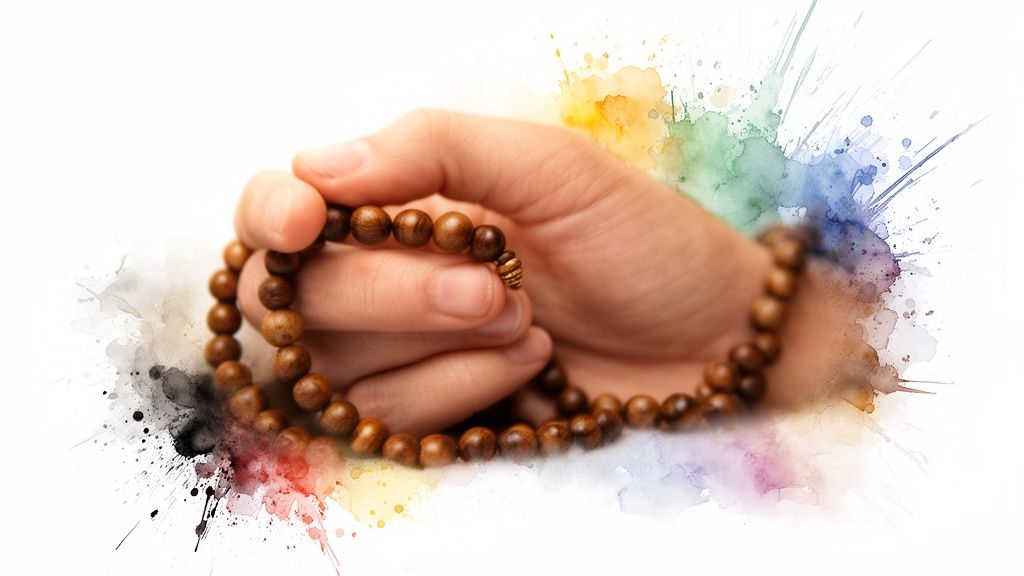
You’ve chosen a mala that resonates with you—now it’s time to awaken its potential. Using your mala for Japa meditation is a profound yet simple practice that can anchor your busy mind and pull you into the stillness of the present moment.
Think of it this way: your mind loves to wander, but your mala gives it a single, calming job to do. The rhythmic touch of the beads becomes a physical anchor, allowing those racing thoughts to gently drift away, one by one.
This beautiful process turns your mala from a simple piece of jewelry into a true partner on your spiritual path. It’s a tool that guides you, breath by breath, toward a quieter, more centered you.
A Step-by-Step Guide to Japa Meditation
Ready to dive in? This ancient practice is incredibly accessible, even if you've never meditated before. Just follow these steps to begin creating a meaningful and focused ritual.
- Find Your Sacred Space: Settle into a quiet, comfortable spot where you can be undisturbed. Sit in a way that feels good for your body—with a straight but relaxed spine—to create a posture of gentle awareness.
- Set Your Intention: Before you begin, hold your mala in both hands and close your eyes. Ask yourself what you want to invite into your life. Is it peace? Gratitude? Strength? This intention is the heart of your practice.
- Choose Your Mantra: A mantra is simply a word, sound, or phrase you’ll repeat. If you're new to this, the universal sound of "Om" is a wonderful place to start. You could also use a simple affirmation like "I am calm" or "I am grounded"—whatever speaks to you.
- Begin the Practice: Drape the mala over the middle finger of your right hand. Starting with the first bead next to the large Guru bead, use your thumb to gently pull the bead toward you while you silently or softly recite your mantra.
- Continue the Cycle: Move your thumb to the next bead, repeating your mantra. Continue this rhythm, bead by bead, letting the simple, tactile sensation keep you present. Let your breath flow naturally, slow and steady.
The Guru bead is your spiritual checkpoint. When your fingers meet it again, you’ve completed one full cycle of 108 repetitions. This is a powerful moment to pause, breathe, and offer a little gratitude for the quiet space you've created.
When you reach the Guru bead, tradition suggests you don't cross over it. Instead, you can simply flip the mala around and start your next round in the opposite direction. This honors the sacredness of the practice and keeps the meditative flow uninterrupted. For an even deeper experience, try pairing this practice with a guided meditation to melt away stress.
Beyond Formal Meditation
The beautiful thing about a mala is that its work doesn't stop when your meditation does. Wearing your mala throughout the day acts as a subtle, constant reminder of the intentions you set.
Every time you feel its weight on your wrist or see it in the mirror, it’s a gentle whisper to come back to your breath, reconnect with your purpose, and carry that sense of peace with you, no matter where your day takes you.
A Guide to Caring for Your Mala
Your mala is so much more than just a beautiful piece of jewelry. Think of it as an energetic partner, a true companion on your spiritual journey. And just like any meaningful relationship, it needs a little care and attention to thrive.
Over time, your beads absorb the energy from your meditations, your intentions, and even the world around you. To keep their energy vibrant and pure, they need to be cleansed regularly. This simple act is like hitting a spiritual reset button, clearing away any stagnant energy the beads have picked up.
This ritual ensures your mala remains a powerful and positive tool, ready to support you in every mindfulness practice.
Energetic Cleansing and Charging
There are so many beautiful and gentle ways to refresh your mala’s energy. The most important thing is to choose a method that resonates with you, turning the act of cleansing into a mindful practice all on its own.
-
Moonlight Bath: One of the most classic methods is to simply place your mala outside or on a windowsill under the light of a full or new moon. The moon’s gentle yet powerful energy is believed to naturally purify and recharge the stones overnight.
-
Sound Healing: You can also use the incredible power of vibration. Let the resonant sounds from a singing bowl, chimes, or a tuning fork wash over your mala. The sound waves effectively break up and clear away any lingering energetic debris.
-
Smoke Cleansing: A favorite for many, this involves gently passing your mala through the smoke of sacred herbs. Sage, palo santo, or cedar are wonderful choices. The aromatic smoke is thought to carry away impurities, leaving your beads feeling bright and clean.
Once your mala is cleansed, it’s the perfect time to charge it with a fresh intention. Hold it in your hands, close your eyes, and take a few deep breaths. Infuse the beads with the energy you wish to cultivate in your life, whether that’s peace, abundance, strength, or clarity.
Your mala is a vessel for your intentions. By regularly cleansing and recharging it, you ensure it remains a clear and powerful conduit for the energy you are calling into your life.
If you’d like your new mala to arrive energetically pristine and ready for your intention, Evolve Mala offers a special Cleanse & Charge service. An experienced practitioner can prepare your piece before it even ships, so it arrives ready to support your journey from the moment you unbox it.
Physical Care and Storage
Keeping your mala physically beautiful is simple. Just gently wipe the beads with a soft, dry cloth to remove any dust or oils. It's best to avoid harsh chemicals or soaking your mala in water, as this can damage more delicate materials like certain woods or the tassel thread.
When you're not wearing or using your mala, find a special place for it. Storing it in a soft pouch or placing it on your altar helps protect it from physical and energetic harm.
Treating your mala with this kind of care ensures it will remain a cherished companion for years to come. To explore these practices more deeply, you can read our detailed guide on how to cleanse crystals and other sacred tools.
Common Questions About Mala Beads
As you start to explore the world of malas, it's natural for questions to pop up. This is your journey, after all, and feeling connected to your practice is what it's all about. To help you along the way, I’ve put together answers to some of the most common things people wonder about when they first discover mala beads.
Can Anyone Wear Mala Beads?
Yes, absolutely! Mala beads have incredibly deep roots in spiritual traditions like Hinduism and Buddhism, but their power isn't confined to a single belief system. People from all walks of life are drawn to them, using them as tools for mindfulness, as physical reminders of a personal goal, or simply as beautiful, meaningful jewelry.
The only real requirement is to approach them with respect for their history and purpose. It doesn’t matter if you're a seasoned yogi or just someone looking for a little more peace in your day-to-day life. A mala can be a wonderful companion for anyone.
A mala is a universal tool for the heart and mind. Its purpose is to center you, and that is a need that transcends any single culture or belief system.
What Does It Mean If My Mala Breaks?
It can be a bit startling when a mala you love and have worn for a long time breaks, but in many spiritual traditions, this is actually seen as a good thing! A broken mala is often interpreted as a sign that you've completed a cycle. It can mean that the intention you set with the beads has been fulfilled, or that you’ve outgrown a pattern you were working to release.
Think of it as a breakthrough, not a breakdown. It’s a powerful moment to pause, reflect, and feel gratitude for how far you've come. You can always have the beads restrung—maybe with a new guru bead to mark a new intention—or you can return the stones to the earth as a beautiful symbol of letting go and starting fresh.
How Do I Choose A Mantra?
Choosing a mantra is a deeply personal process. The best mantra for you is a word or phrase that truly resonates with what you want to call into your life right now. If you're just starting out, a simple and universal sound like "Om" is a fantastic, grounding choice.
You could also work with positive affirmations, like "I am calm" or "I am strong." There really is no "wrong" choice here. The key is to get quiet for a moment. Close your eyes, breathe deeply, and ask yourself what energy you need most—is it peace? Strength? Love? Clarity? The words that feel right in your heart are the perfect ones to begin with.
Here at Evolve Mala, we believe the right tools can make your journey into mindfulness feel both sacred and beautiful. Take a look at our collection of handcrafted gemstone malas and find the perfect partner for your practice.